
The First Seven Years: Where the Future Begins
A Montessori Perspective on the Most Influential Stage of Human Development
Author Wissal merhy
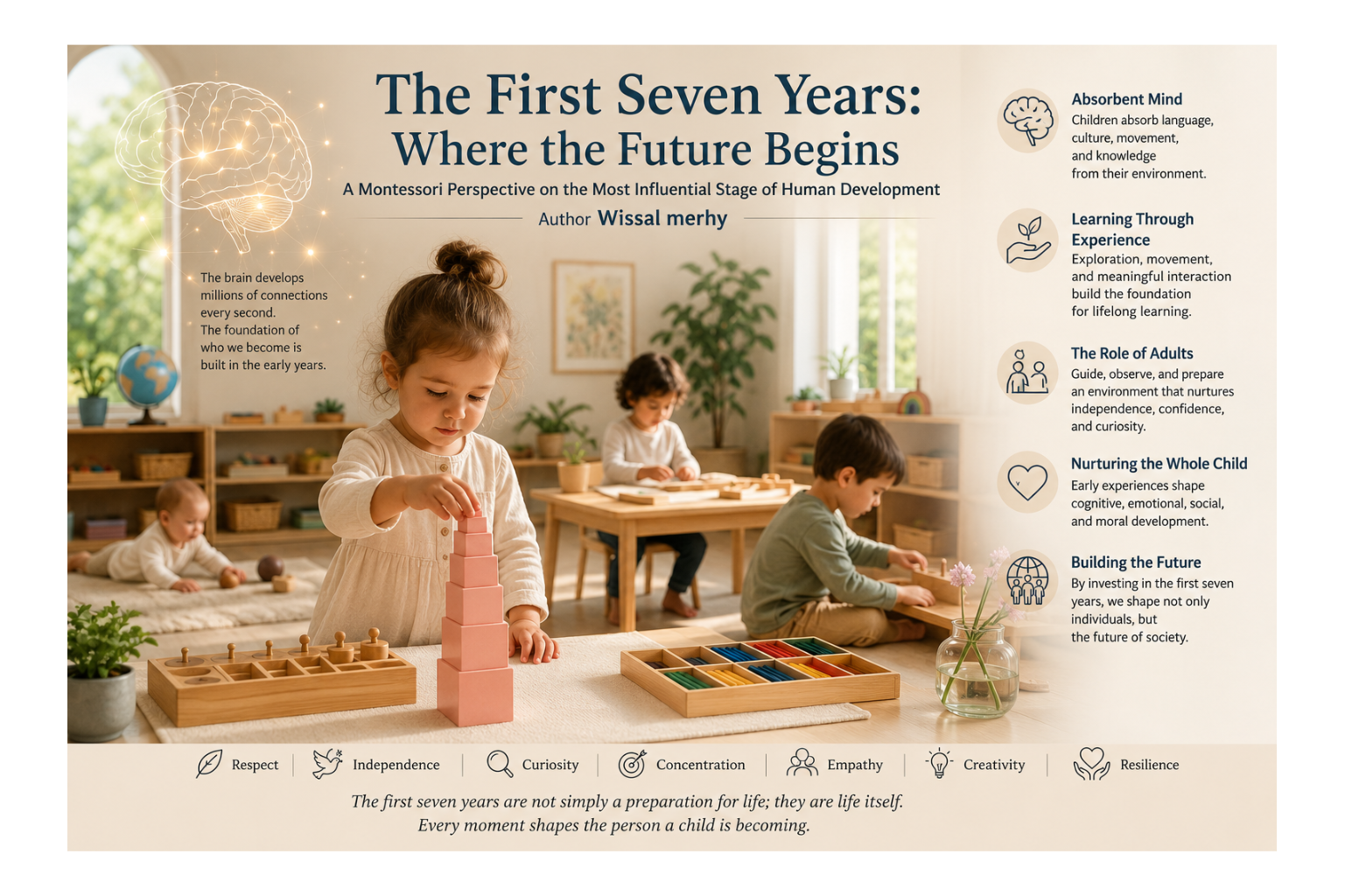
The first seven years of life are not merely the beginning of childhood—they are the foundation upon which an individual's personality, habits, values, and approach to learning are built. Modern neuroscience confirms that the brain develops at an extraordinary pace during these early years, forming millions of neural connections every second. Long before formal schooling begins, children are already constructing the architecture of their future.
More than a century ago, Dr. Maria Montessori recognized this remarkable period as the most significant stage of human development. Her educational philosophy was grounded in careful scientific observation and emphasized that children possess an 'absorbent mind'—an extraordinary capacity to unconsciously absorb language, culture, movement, social behavior, and knowledge directly from their environment.
From birth to approximately six years of age, learning occurs naturally through exploration, repetition, movement, and meaningful interaction rather than passive instruction. Montessori believed that education should support this innate developmental process by preparing environments that encourage independence, concentration, curiosity, and purposeful activity.
The role of adults during these years is not to control every aspect of learning but to guide, observe, and provide experiences that match the child's developmental needs. A respectful environment, freedom within clear limits, and carefully selected materials enable children to develop confidence, self-discipline, and a genuine love of learning.
Scientific research increasingly supports many Montessori principles. Positive early experiences strengthen cognitive development, emotional regulation, executive functioning, and social competence, while chronic stress and limited stimulation can have lasting consequences. These findings reinforce the importance of investing in high-quality early childhood experiences.
Success in adulthood is shaped not only by academic achievement but also by resilience, creativity, empathy, critical thinking, and independence—qualities that begin developing long before a child enters primary school.
The first seven years are therefore not simply a preparation for life; they are life itself. Every conversation, every opportunity for exploration, every act of respect, and every carefully prepared environment contributes to the person a child is becoming.
When families and educators recognize the immense potential of these formative years, they do more than educate children—they help shape the future of society itself.