
Kamel Al-Sabbah: A genius of electricity and light
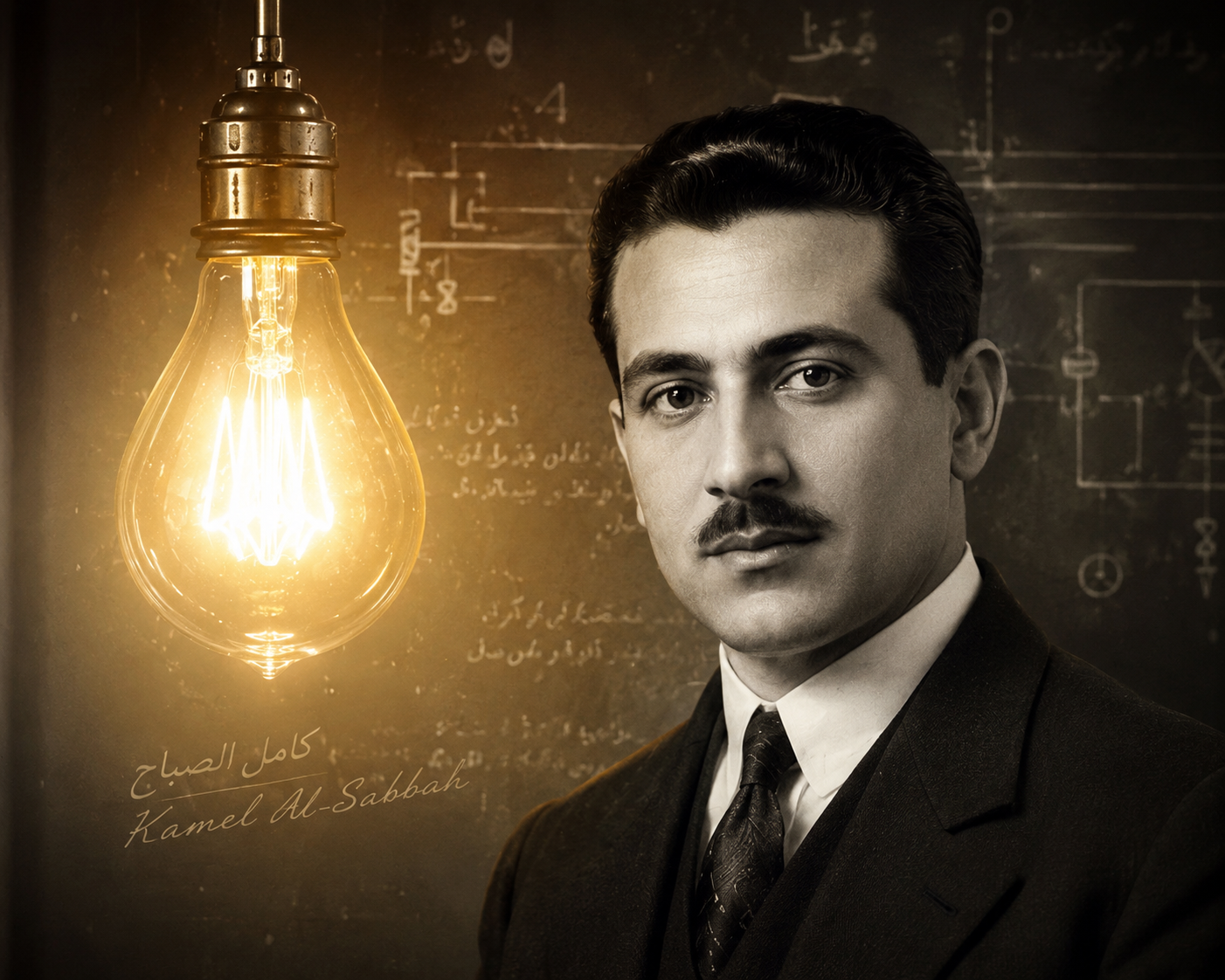
Kamel Al-Sabbah is considered one of the most prominent Arab scientists of the twentieth century, even being nicknamed "the Edison of the East" due to his scientific genius and inventions in the fields of electricity, energy, and communications. Despite his short life, he left a significant scientific legacy that has earned him a place among the world's leading innovators.
Kamil al-Sabbah was born in 1894 in the city of Nabatieh in southern Lebanon, during a period of significant political and cultural transformation in the region. From childhood, he displayed a clear inclination towards mathematics and science, and was distinguished by his quick comprehension and love of discovery. He received his primary education in schools in the south, then moved to Beirut where he continued his scientific studies. He impressed his teachers with his exceptional intelligence and ability to analyze complex problems.
Kamel Al-Sabbah later traveled to the United States to further his scientific research, where he began working in the fields of electricity, engineering, and electronics. He joined General Electric, which was then one of the world's leading technology companies. In the company's laboratories, his name quickly rose to prominence due to his advanced ideas, particularly in developing electrical power and improving the efficiency of light bulbs and electronic systems.
In fact, Kamel Al-Sabbah did not discover electricity, as it was scientifically known centuries before his birth, and many scientists, such as Benjamin Franklin, Michael Faraday, and Nikola Tesla, contributed to its understanding. However, Kamel Al-Sabbah was among the pioneers who contributed to the development of modern electricity and energy applications, particularly in:
- Improving electrical lighting technologies.
- Developing broadcasting and transmission systems.
- He conducted early research on solar energy and converting sunlight into electrical energy, ideas that were many years ahead of his time.
It is said that some of his ideas about solar energy were close to the principles upon which modern solar panels are based today.
Kamel Al-Sabbah registered a number of patents in the following fields:
- Electric lighting.
- Television and transmission technologies.
- Improving electronic tubes.