
Are we ready for the age of artificial intelligence... or has it already overtaken us?
Journalist Mushir Fayyad
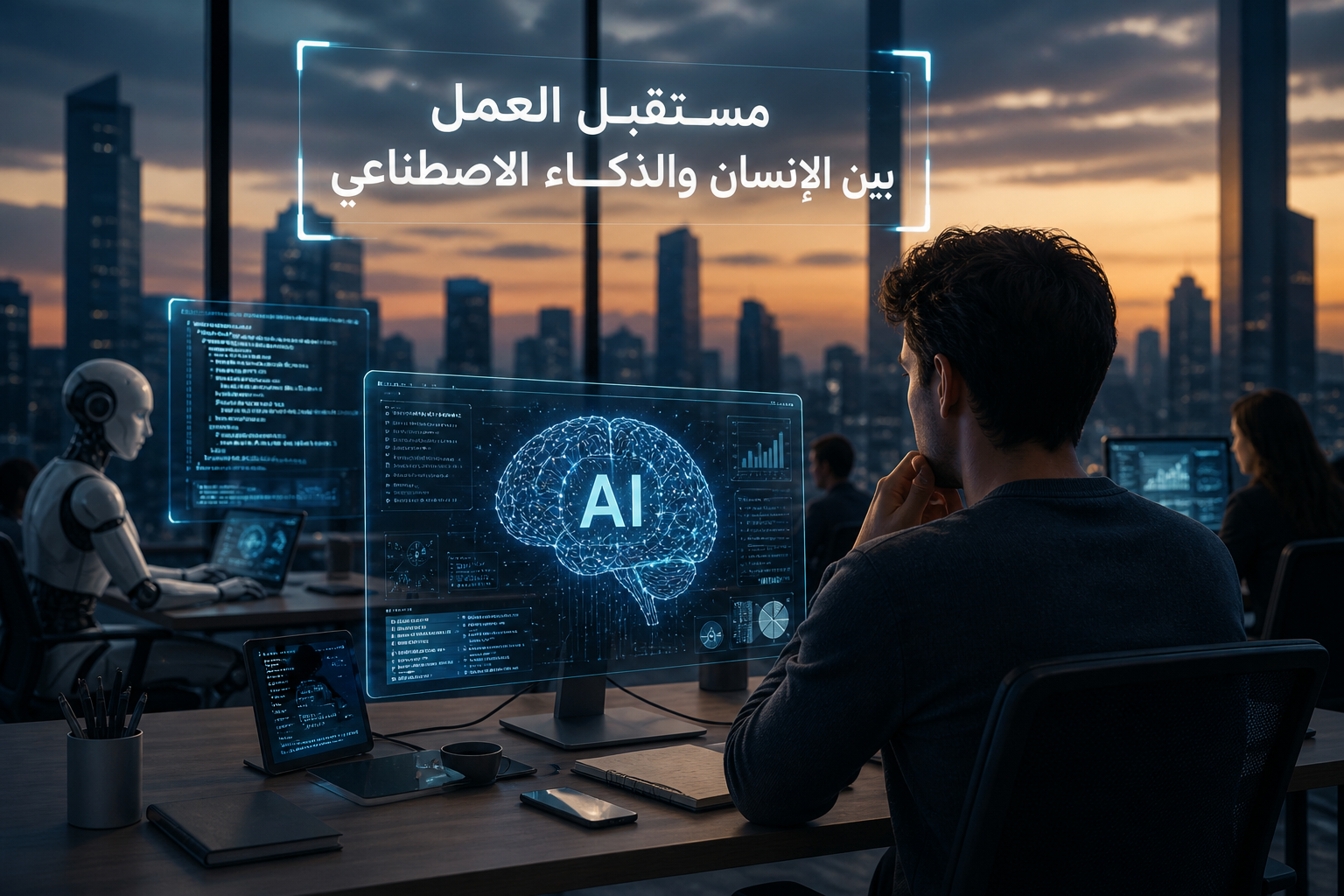
At every historical stage, there has been a technological transformation that radically reshaped the economy and society: the Industrial Revolution, then the Internet Revolution, and now we stand before a more accelerated and complex stage—the Artificial Intelligence Revolution.
But the difference this time is that change is not knocking slowly on doors, but rather entering directly into workplaces, schools, institutions, and even daily life without permission.
In 2026, the question is no longer: Will artificial intelligence affect the job market? Rather, it has become: Which jobs will remain, which will transform, and how can humans redefine their role within this new landscape?
The reality is that routine jobs, whether in administration, services, or even some areas of media and analysis, are becoming more susceptible to automation. Systems capable of writing reports, analyzing data, and designing content are no longer a future idea, but a daily practice in many institutions around the world, and this creates legitimate tension for a wide segment of employees, especially those who have not had the opportunity for professional retraining.
But the picture is not entirely bleak. Just as the internet has eliminated some jobs, it has also created thousands of new ones.
Artificial intelligence, in turn, is not only replacing humans, but is redefining the need for them. There is a growing demand for specialists in model training, AI ethics, cybersecurity, and advanced data analysis. Human skills—such as creativity, critical thinking, and emotional intelligence—are more valuable than ever, simply because they remain impossible to fully replicate.
The real problem is not with the technology itself, but with the speed at which we adapt to it.
Educational institutions in many countries are still teaching skills designed for a pre-AI world, while the market is moving faster than they can keep up. This gap between education and the job market may be more dangerous than the technology itself.
On the other hand, artificial intelligence poses a question that goes deeper than economics: What is the meaning of work in the first place? If machines are able to accomplish a large part of the tasks, will human time be redistributed towards creativity, learning, or even personal life? Or will we witness a widening gap between those who own the technology and those who are excluded from it?
Ultimately, the future doesn't seem to offer a choice between "accepting" or "rejecting" artificial intelligence, but rather between preparing for it or being marginalized by it. What's needed is not resistance to change, but guiding it... Technology, however powerful, remains a tool; the true value lies in how it's used and who has the ability to direct it.
The question today may not be: Will artificial intelligence take our jobs? Rather: Will we develop ourselves fast enough to remain part of the equation?